
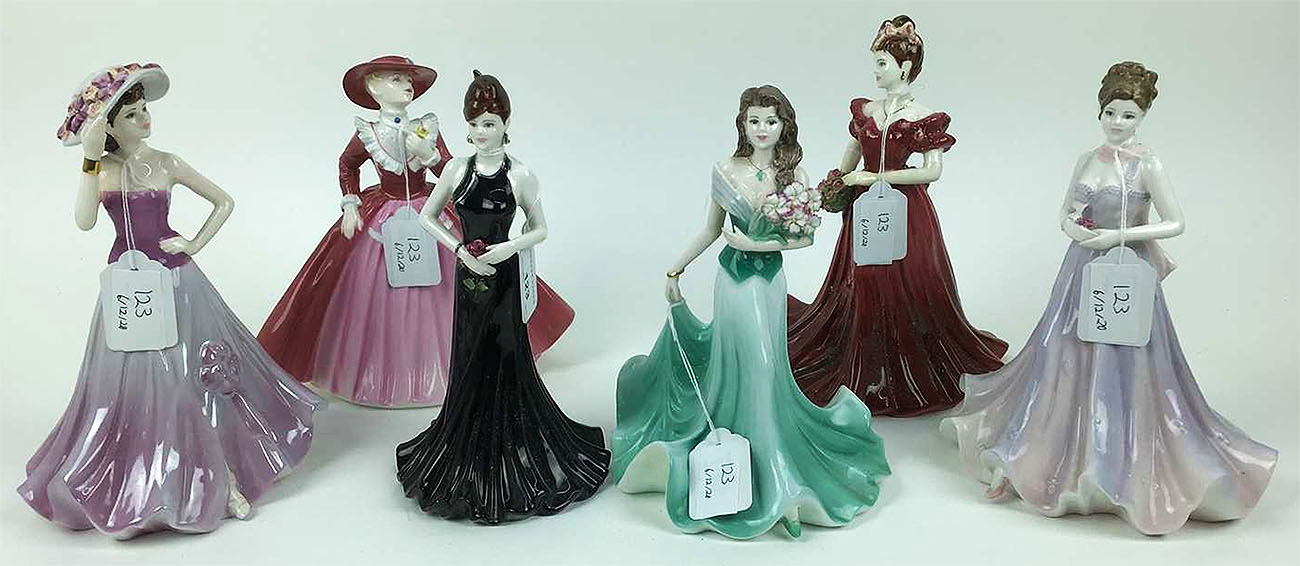
Coalport Fashion figures

Coalport Figurines: Timeless Elegance and English Porcelain Mastery

A journey through English porcelain mastery: celebrating two centuries of Coalport's exquisite Ladies of Fashion, rare historical figures, and the intricate artistry that makes these limited edition collectibles treasures worth seeking out.

A Personal Note from the Collector

If you’re anything like me, walking into a dusty antique shop or browsing an auction catalog feels like cracking open a history book written in porcelain. You spot a piece of Coalport—maybe it’s a lady caught mid-curtsy, or a brightly colored flower basket—and suddenly, you’re not just looking at a figurine. You’re touching a tangible link to 18th-century England, a relic of the Ironbridge Gorge’s industrial genius, and a testament to the sheer artistic stubbornness of a man named John Rose.

Forget what you’ve read in those dry, clinical summaries. Coalport figurines are more than just bone china; they are whispers of Georgian elegance and Victorian opulence, preserved in delicate glaze.

The market today is shifting. While the world chases instant gratification collectibles, classic English porcelain remains a cornerstone of serious collecting. But how do you tell a coveted treasure from a mass-produced piece? How do you get to the heart of what makes a limited edition figure truly rare? That’s what we’re here to unpack. We’re going beyond the basics to update this guide with a serious look at Coalport’s history, the techniques that defined it, the iconic Ladies of Fashion figurines that dominate the collector base, and—most importantly—how to assess the true Coalport china value in today’s landscape (2024–2025).

Part I: The Foundry of Genius – The Revolutionary History of Coalport Porcelain

1. The Visionary: John Rose and the Shropshire Rivalry (1795–1814)

The Coalport story doesn’t begin with delicate dancing ladies; it begins with grit, coal, and canals. John Rose, the ambitious founder, established his works in 1795 in Coalport, Shropshire, right on the newly opened Coalport Canal, a location critical for transporting raw materials and finished wares. Rose wasn’t just another potter; he was a disruptor.

He initially trained at the nearby Caughley factory, one of England’s earliest fine porcelain producers. His ambition was to rival the dominant names—Wedgwood, Derby, and later Minton—by focusing on technical perfection. Early Coalport ware was often called “Coalbrookdale Porcelain” due to the nearby famed Dale.

A lesser-known, yet critical, fact in the early history is the direct rivalry between the Rose brothers. From 1800 to 1814, John’s younger brother, Thomas Rose, ran a competing factory on the opposite bank of the canal. These early pieces, often difficult to distinguish without expert knowledge, demonstrate the fierce, competitive spirit that drove innovation in the Ironbridge Gorge. The eventual consolidation of interests in 1814, with John Rose taking over Thomas’s works, unified the operation and set the stage for Coalport’s golden age.

2. Technical Mastery: The Golden Age of Innovation (1820–1860)

What truly elevated Coalport above many contemporaries was its technical prowess. This period saw John Rose introduce two major breakthroughs that are essential for any serious collector to understand:

  • The Leadless Glaze Revolution (c. 1820): Rose received the prestigious Gold Medal from the Royal Society of Arts for developing a new, high-quality leadless glaze coupled with his felspar porcelain formula. This was a monumental achievement. The new glaze was harder, more transparent, and gave the porcelain a brilliant, luminous surface. Critically, the absence of lead allowed the enamel colors painted over the glaze to fuse perfectly and retain their brilliance, a major advantage over older glazes that could dull delicate tints.
  • The Batwing and The Indian Tree: While the original article mentions the famous blue-and-white “batwing” pattern (inspired by Oriental ceramics), Coalport is also credited with originating the globally recognized “Indian Tree” pattern, though based on Chinese rather than Indian motifs. This commercial success secured the factory’s financial footing.
  • The Sèvres Imitation: Under John Rose II (who took over in 1828), the factory became famed for lavishly imitating French Sèvres porcelain, using rich, signature ground colors like their famous rose du Barry (an imitation of Sèvres’ rose Pompadour), claret, and mazarine blue. These highly decorated, often heavily gilded, ornamental wares command high Coalport china value today.

3. The Figurine Speciality: Floral Encrustations and Jewelling

As the 19th century progressed, Coalport’s focus turned increasingly to ornamental and decorative pieces, particularly the figurines we collect today.

  • Floral Encrustation: From the 1830s to the 1840s, the factory specialized in intricate, almost unbelievable sprigged floral encrusted decoration. Vases, inkstands, and small boxes were overlaid with masses of tiny, hand-modeled flowers. These pieces, often marked “Coalbrookdale,” are highly sought after and represent the pinnacle of rococo porcelain decoration in England.
  • “Jewelling” Technique: In the second half of the 19th century, Coalport mastered “jewelling,” a stunning and laborious technique involving applying tiny beads of colored enamel (like miniature gemstones) onto the porcelain, usually over a rich gold ground. This gave the surface a spectacular, opulent texture and appearance, further cementing Coalport’s reputation for luxury.

4. Modern Status: From Staffordshire to Wedgwood (1926–Present)

The Coalport works remained in Shropshire until 1926. Financial difficulties in the post-WWI era led to the company being purchased by Cauldon Potteries, Ltd., and production officially moved to the heart of the British ceramics industry: Staffordshire.

Though the location changed, the Coalport porcelain brand name was retained. In 1967, the brand was absorbed into the vast Wedgwood Group (later part of Waterford Wedgwood, then WWRD). While the original factory site in Shropshire now houses the wonderful Coalport China Museum—a must-visit for any collector—the brand itself continued to produce high-quality, collectible figurines for decades, primarily focusing on the popular lady figures and limited edition commemoratives that are so beloved.

Part II: Deciphering the Markings and Identifying Rarity

A serious collector must know how to date a piece, as this directly correlates with Coalport figurine value. The factory used a bewildering range of marks throughout its history. When searching for a piece’s provenance, use keywords like identify Coalport porcelain or Coalport figurine markings.

The Crucial Condition Factor

Unlike high-end fine art, the value of figurines is highly susceptible to condition. A chip, a hairline crack, or even rubbing to the gilding can reduce the value by 50% or more. For maximum value, collectors search for Coalport figurines with perfect condition and the original box and certificate of authenticity (COA), especially for limited edition runs.

Part III: The Hierarchy of Coalport Figurines and Key Collections

The true collector market focuses on figures that tell a story—pieces from specific collections, modelers, or historical commemorations.

1. The Dominance of the Lady Figurines (Ladies of Fashion)

The most popular and enduring category is the elegant lady figure, often categorized under the Ladies of Fashion or Age of Elegance series.

  • Ladies of Fashion: This series, launched in the mid-20th century, defines the modern Coalport brand. Figurines like ‘Melanie,’ ‘Jean,’ ‘Debbie,’ ‘Emily,’ and ‘Rosemary’ are found frequently and form the backbone of many collections. They generally command a solid, accessible price point (often $60 to $150 depending on size and detail).
  • The Debutante and Age of Elegance Series: These sub-series often feature lavish dresses and intricate details. Figures like ‘Spanish Serenade,’ ‘Lady Valentine,’ or ‘Lesley’ are highly decorative and popular.
  • The Snowman Collection: While not an “elegant lady,” the figures related to Raymond Briggs’ The Snowman (such as “The Hug”) are incredibly popular, especially as Christmas collectibles, and maintain a steady market value, particularly when boxed.

2. The Top Tier: Limited Editions and Double Figures

If you are looking for rare Coalport figures that fetch premium prices, you must focus on low-run limited editions, especially those featuring multiple figures or designed by top artists.

3. Forgotten Gems: Early Wares and Non-Figural Pieces

To truly round out an expansive collection, look beyond the ladies.

  • Floral Encrusted Vases: The intricate, flower-encrusted ornamental pieces from the 1830s to 1850s (often marked Coalbrookdale) are highly valued historical artifacts, representing the factory’s technical peak.
  • Indian Tree Dinner Services: Complete or near-complete dinner services in the famous “Indian Tree” pattern, especially early versions, still attract steady interest from decorators and historical china enthusiasts.
  • The Gilbert and Sullivan Series: Figures like ‘The Mikado’ or ‘The Pirate Captain’ offer a unique, theatrical theme rarely seen in modern porcelain, making them unique collector items.

Part IV: Coalport China Value and Market Trends (2024–2025)

Understanding the Coalport china value means looking at the broader market and recognizing where these figurines fit.

The Shifting Collectibles Landscape

Recent market analyses (2024–2025) show that while the ultra-high-end art market is slowing, the middle-market—where most English porcelain figurines reside—is stable and even seeing a quiet uptick in activity.

  • The Middle Market Strength: Coalport figurines, generally priced between $40 and $400, benefit from this trend. They are accessible enough for new collectors yet refined enough for seasoned enthusiasts.
  • Condition is King: In this price bracket, flawless condition is the single most important factor. Collectors are not willing to pay for repairs or significant chips on non-museum-grade pieces.
  • Online Marketplace vs. Auction House: Most common Ladies of Fashion figures are traded successfully on online platforms like eBay and Etsy (selling for $50–$150). The truly rare Coalport figures and high-edition commemoratives (e.g., those achieving four-figure sums) still need the provenance and global reach of a major auction house to realize their peak value.

How to Value Your Coalport Figurine

  1. Identify the Mark: Use a dating guide to place the figurine into a historical period (see Part II). Pre-1830 pieces are generally more valuable.
  2. Determine the Edition/Series: Is it a standard release (like a Ladies of Fashion figure) or a numbered limited edition? Check the base for edition size (e.g., 750/7500). Lower numbers are generally higher value.
  3. Assess Condition and Documentation: Is the piece perfect? Does it have its original box and COA? This can add 20% or more to the value.
  4. Check Comparables: Search for the exact name of your figurine and the words ‘sold price’ or ‘auction result’ (e.g., “Coalport Night at the Oscars sold price”). Do not rely on current ‘asking’ prices, which are often inflated.

The current trend favors pieces that are scarce, unusual in subject matter (like the double figures or the Gilbert and Sullivan series), or showcase Coalport’s antique technical mastery (such as the early floral-encrusted wares).

The Charm of a Coalport Collection

Let’s be honest: collecting Coalport is a joy, not a mere transaction. It’s about owning a small piece of decorative history, a slice of a 200-year-old tradition of English elegance. Every time you dust your collection of Ladies of Fashion figurines, you are engaging with the lineage of John Rose, the ambition of the Ironbridge Gorge, and the intricate handiwork of Staffordshire’s finest modelers.

The market for these fine porcelain figures remains vibrant and steady, a comforting anchor in the sometimes-chaotic world of collectibles. Whether you are seeking a rare Coalport figure to complete a series, hunting for an early, unmarked piece from the Coalbrookdale era, or simply appreciating the serene beauty of a delicate debutante, the timeless allure of Coalport promises an elegant journey. Start with the pieces that speak to you—the ones that capture that human sense of drama, fashion, and history—and you’ll find that the true Coalport china value is in the story they tell, not just the price they fetch.